# 特定の配布のエアドロップ

<figure><img src="/files/2L0tkwk6xPAxToiZKTw1" alt=""><figcaption></figcaption></figure>

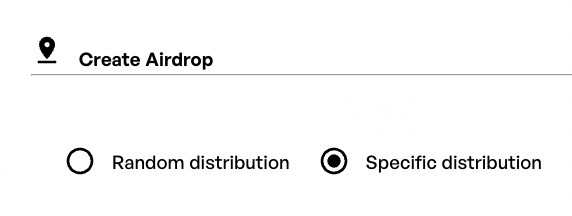
特定配布を使用すると、どのトークンをどのウォレットにどの量だけ送信するかを正確に指定できます。
<figure><img src="/files/nJd0cR9SMLgB4fevoJC9" alt=""><figcaption><p>特定配布を選択する</p></figcaption></figure>

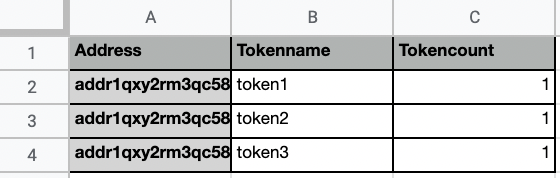
特定配布によるエアドロップでは、[プロジェクトのNFTをcsvファイルにエクスポート](https://docs.nmkr.io/nmkr-studio/project/export-nft-as-csv)し、このcsvファイルの列「C」からトークン名をコピーします。これはExcelやGoogle Sheetsのような表計算ソフトで可能です。<br>

<figure><img src="/files/EDf1WMRS8poOr2gjiltW" alt=""><figcaption></figcaption></figure>

トークン名を新しいcsvファイルに追加するか、ダウンロードした csvファイルを以下のように再構築し、受け取りアドレス（ステークアドレスではありません）やトークンの量（[代替可能トークンを](https://docs.nmkr.io/nmkr-studio/token#fungible-token)使用するプロジェクトにのみ関連し、プロジェクトにNFTがある場合はTokencount "1 "を使用してください）などの詳細を追加します。

<figure><img src="/files/SrWaz6N9hzQcZJjF2Rgq" alt=""><figcaption></figcaption></figure>

ファイルをcsvファイルとして保存

<br>

**エアドロップ用のcsvファイルをアップロードする**

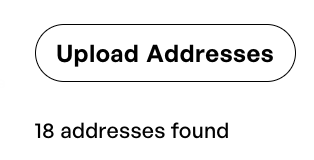
このファイルをエアドロッパーにアップロードすると、認識されたアドレスの数がカウントされます。

<br>

<figure><img src="/files/VcEbG4wm6plGqnLDRILF" alt=""><figcaption><p>txtファイルをアップロードし、カウントを確認</p></figcaption></figure>

#### エアドロップするトークンの量を選択し、特定のエアドロップを開始する

次のステップで、各アドレスにエアドロップするトークンの量を選択します。

<figure><img src="/files/NnmbOG7JATSWMZjAcKRq" alt=""><figcaption><p>各エアドロップのトークン量を選択</p></figcaption></figure>

複数のトークンを持つホルダーにどのように対応するかを決めるオプションは、この対処法には無関係であるため、グレーアウトされて[^1]います。

<figure><img src="/files/Srao9GHeJhT7BCIqcJXk" alt=""><figcaption></figcaption></figure>

「エアドロップ開始」ボタンでエアドロップを開始します。

<figure><img src="/files/Tp5obTw3lan6REAjhiVp" alt=""><figcaption><p>「エアドロップ開始」</p></figcaption></figure>

自分のエアドロップがどのように処理されているか確認したい場合は、[ミントの「ジョブを送信](https://docs.nmkr.io/nmkr-studio/project/mint-and-send-jobs)」にアクセスしてください。

[^1]:


---

# Agent Instructions: Querying This Documentation

If you need additional information that is not directly available in this page, you can query the documentation dynamically by asking a question.

Perform an HTTP GET request on the current page URL with the `ask` query parameter:

```
GET https://docs.nmkr.io/jp/nmkr-studio/minto/eadoropp/nonoeadoroppu.md?ask=<question>
```

The question should be specific, self-contained, and written in natural language.
The response will contain a direct answer to the question and relevant excerpts and sources from the documentation.

Use this mechanism when the answer is not explicitly present in the current page, you need clarification or additional context, or you want to retrieve related documentation sections.